



Alexander Starchenko
After a record-breaking 2021 venture industry is entering turbulent times. Economy slowdown, interest rates increase, rise of inflation – all these factors make investors more reluctant to write cheques to startups. According to CB Insights, global startup funding in Q1 2021 fell by 19 percentfrom the previous quarter – the greatest drop in at least 16 quarters.
Does it mean that the Venture golden era is over? We don’t think so. At least not for the cleantech and, specifically, for the Energy transition in Europe.
Once started as an alternative to the old-style way of producing electricity by rotating machines with steam, givingthe promise to deliver electricity cheaper, the Energy transition transformed to an essential part of saving our civilization from global warming, and now – as a means to secure the energy independence of Europe.These are very strong tailwinds for the innovators in the energy sector. But they also push for even more mature technologies and quick actions.
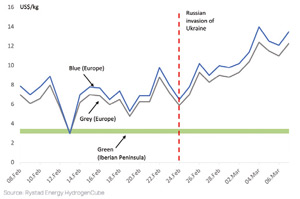
Take for example hydrogen. It is broadly agreed that hydrogen should become one of the main energy carriers in the decarbonised world. But until recently, the common expectation was that green hydrogen would become cost-competitive with grey hydrogen and eventually natural gas as an energy source in 2030-s. The innovators community could take their time to develop the technology, bring down costs, build new companies. In the middle of 2021, however, Europe started experiencing shortages in supplies of Russian natural gas and subsequently natural gas priceshave spiked.
Then all of a sudden, green hydrogen became cost competitive with the grey hydrogen already by the end of 2021 (that’s estimates of Rystad Energy)! No more time to develop and foster technology, it’s time to build electrolysis capacity! Even if the global price of the natural gas falls (which now is unlikely due to the Russian invasion of Ukraine and the global run to avoid buying Russian gas) Europe will not be ready to come back to its massive imports. Europeans have understood that relying on imported energy sources makethe continent vulnerable to instability on other markets.
That means high demand for those technologies which are ready to be scaled. The demand is underpinned both by political support and peoples’ acceptance. And there are investors like ourselves who are ready to support these technologies on their way to mass adoption.
"Once started as an alternative to the old-style way of producing electricity, the Energy transition has transformed as a means to secure the energy independence of Europe"
What kind of technologies do we see as the most prominent? No doubt that solar and wind will dominate the primary energy mix. Any other novel technologies of electricity generation are too nascent to be implemented. But improvements of wind and solar, as well as monitoring systems allowing to squeeze each additional kWh out of these resources will be in demand. It is also important to note, that as technology matures, soft costs (balance of plant, engineering, permitting, works and operations) gain still more importance in driving down the cost of electricity produced by those power plants. And here is much space for improvement by technology innovators.
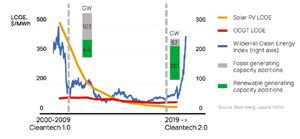 Energy storage – grid-scale to balance the intermittency of resources and distributed to pair with rooftop solar – is just as important as the production of energy. Li-Ion is here to stay, but it has a lot of ways to be improved. Long duration storage – 10 hours to seasons – should be driven by completely different technologies than Li-Ion. Most promising are flow batteries and Power-to-X (think hydrogen here).
Then we need to transmit and distribute the electricity. Aluminium and copper wires will be with us. But power flows will increase and be much less predictable. And we need to use the existing wires much more efficiently, loading them up to the maximum not 5 percent to 10 percent of time as today but as close to 100 percent as we can. This is done by different smart grid technologies and power grid management.
Consumption of electricity will no longer be just consumption. It is to be predictable and managed. Technologies we look for here are load analysis and disaggregation, demand management, prosumers and energy communities.
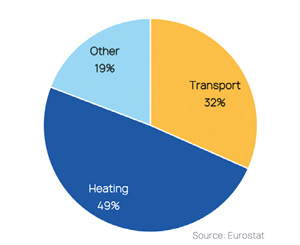
 Finally, there is the elephant in the room: renewable heat. Nearly half of the total energy we consume is used for heating. That is high-temperature heat for industrial processes and low-temperature heat for heating our homes. Among ways to decarbonise heat we see renewable gases like hydrogen for the former and solar thermal and heat pumps for the later.
This outlines technologieswe look to invest in. Implementing these technologies in the short- to medium term becomes vital for Europe to gain self-sufficiency and energy independence. Implementing these technologies globally in the medium- to long term allows to tackle the climate change – the challenge facing our civilization no matter short-term events and circumstances. That is why we believe these technologies will shape the future of the energy sector – in Europe and globally.
commitments to various venture capital funds, including sole commitments to two funds operated by its subsidiary, Venture Growth Investments (VGI) , have amounted to about 433 billion ($3.2 billion ).
 JIC not only provides risk capital to these venture capital funds but also tries to nurture emerging venture capital operators by giving them advice in forming their first fund in hoping that they will become top-notch Japanese venture capital firms in the future. JIC will further reinforce its investment strategies in response to the government's plan. One of the strategies is “Go Global”, where JIC will make commitments to international venture capital funds that have the ambition to work with Japanese startups and help them to do international business.
In 2022, the size of the startup funding market was 877 billion ($6.4 billion) in Japan. Compared with Japan’s GDP, which is the third largest in the world, the market was only 0.13 percent of the GDP. In peer countries like U.S. and U.K., the ratios were much larger (U.S.=1.02 percent, U.K.= 0.99 percent), indicating that the Japanese ecosystem is in still nascent status.
However, the status has worked in favor of Japan. While U.S. and European markets recorded a huge decline in startup funding in 2022, the Japanese market performed relatively well with a year-over-year growth rate of plus 3 percent (preliminary). This is partially explained by the fact that, even back in the boom period in 2021, growth stage funding was still under-developed in Japan, and, therefore, market correction in the stage during the year gave a relatively small impact and, on the other hand, growing early-stage funding led the total funding volume to increase. This would bode well for Japan.
The Japanese government aims high. The five year plan targets to create a 10 trillion ($76 billion) startup funding market in five years and to produce 100 more Japanese unicorns by then. Japan Business Federation or Keidanren, an industrial organization representing leading Japanese companies, is also promoting the growth of startups and working with the government to make it happen. In five years, people will learn whether the public and private initiatives eventually paid off. The author believes the enthusiasm observed at City-Tech. Tokyo 2023 is a harbinger of good fortune.
